Monday, February 2, 2026

Fictional & Documentary Space: Vivian Sobchack and Jean Renoir's Rules of the Game

This week we will be exploring Vivian Sobchack's discussion about the real and the irreal in her essay, "On the Death of a Rabbit in Fictional Space: Extra-textual Knowledge and Documentary Consciousness." 

If you are interested in reading more of Sobchack's analysis about the hunting scene from Jean Renoir's film, Rules of the Game, please refer to her book Carnal Thoughts: Embodiment and Moving Image Culture (UC Press, 2004) Chapter 11: "The Charge of the Real: Embodies Knowledge and Cinematic Consciousness," pp. 258-285. You may be able to find a PDF online, if you look.
  Film Still from Jean Renoir's Rules of the Game (1939)

According to the Criterion Collection,


Considered one of the greatest films ever made, The Rules of the Game (La règle du jeu), by Jean Renoir, is a scathing critique of corrupt French society cloaked in a comedy of manners in which a weekend at a marquis’ country château lays bare some ugly truths about a group of haut bourgeois acquaintances. The film has had a tumultuous history: it was subjected to cuts after the violent response of the premiere audience in 1939, and the original negative was destroyed during World War II; it wasn’t reconstructed until 1959. That version, which has stunned viewers for decades, is presented here.

The son of the great impressionist painter Pierre-Auguste Renoir, Jean Renoir was also a master of his medium: cinema. After making his mark in the early thirties with two very different films, the anarchic send-up of the bourgeoisie Boudu Saved from Drowning and the popular-front Gorky adaptation The Lower Depths, Renoir closed out the decade with two critical humanistic studies of French society that routinely turn up on lists of the greatest films ever made: Grand Illusion and The Rules of the Game (the former was celebrated in its time, but the latter was trashed by critics and audiences—until history provided vindication). After a brief, unfulfilling Hollywood stint during World War II, Renoir traveled to India to make his first Technicolor film, The River, and then returned to Europe in the early fifties to direct three visually dazzling explorations of theater, The Golden Coach, French Cancan, and Elena and Her Men. Renoir persisted in his cinematic pursuits until the late sixties, when, after the completion of The Little Theater of Jean Renoir, a collection of three short films, he decided to dedicate himself solely to writing, leaving the future of the medium to those who looked to him in reverence.

  Film Still from Jean Renoir's Rules of the Game (1939)

Vivian Sobchack's essay isn't an in-depth analysis about the narrative cycle in Jean Renoir's Rules of the Game, but instead it explores the way in which there is a disruptive collision between the real and the irreal within the space of this fictional movie. She posits that this very disruption prevents the spectator from re-engaging in the immersive experience of the fiction once they recognize that real deaths occurred in the service of the fiction. While the real deaths are birds and rabbits– instead of people– does this shift the way that you respond to the film?

What is the irreal, about which Sobchack speaks? How would you define the irreal or irreality? How does the irreal differ from the real?

The Irreal: The best way to contextualize the irreal is that it is an illusion of reality created within a fiction, and that it takes its cues from the real world. In other words, it is a fiction that looks like reality, and such a device is a very useful tool in film because it creates a cohesive space within the fiction that allows the spectator to temporarily suspend their disbelief in order to engage in the immersive space of the narrative.

In Rules of the Game the irreal is the fictional story that is being told and the real refers to the death of the rabbits and birds that were actually killed in the hunt scene that you will watch below. 

Sobchack argues that once we understand that these real animals were actually killed in the service of this fictional story that the space of the fiction is forever ruptured and cannot be repaired. She claims that the subsequent actions in the fiction, and the eventual death of a character in the film, which is foreshadowed by the deaths of the animals, become irrelevant. Thus, the death of the irreal person (a character in the film) is displaced by the real deaths of animals. Therefore, the irreal death is overtaken in importance by the real deaths of the rabbits, and as a result the seamless space of the fiction is broken.

Questions to ask yourself while viewing the clip of the hunting scene:

1) Does the fact that these deaths occurred 85 years ago in any way desensitize your response?

2) Does knowing that these animals actually died in the service of this film shift the way that you respond to the scene?

3) While reading Sobchack's essay, one has the impression that only a single rabbit died– when in fact it is clear that many rabbits and birds died in this hunting scene. Is there a singular moment to which she appears to be referring? If so, identify it and the precise moment in the clip (cite the time- i.e.: Renoir, 01:15 - 02:00).

4) Do you agree with the premise of Sobchack's argument after watching the scene to which she refers? Why, or why not?
Jean Renoir. Rules of the Game film clip.

Monday, January 19, 2026

Department of Art Honors Open Studios on Wednesday, January 28 from 4:00-6:00

What: Honors Open Studios
When: Wednesday, January 28 from 4-6pm
Where: Arts 0242 & Arts 1352
Who: The Department of Art Honors Cohort

Friday, January 16, 2026

Mechanics of a Formal Research Paper & Scholarly Research Training Workshops

Scholarly Research Training WorkshopWednesday, January 21 from 12:30-1:45 in lecture with Heather Nisen.

Mechanics of a Formal Research Workshop: Monday, February 2 from 12:30-1:45 in lecture.

Heather Nisen (Art & Architecture Librarian):
hnisen@ucsb.edu
http://guides.library.ucsb.edu/art1a
(805) 893-3026

Here is the link to the plagiarism tutorial that the Teaching & Learning Department created:

Paper Format (PAPER TOPIC HERE)

- 10 pages of text (this does NOT include the cover page, bibliography or images)
- Double-spaced
- Cover page
- Footnotes or endnotes
- Bibliography
- Images (at the end of the paper)
- Use at least 10 different research sources (including peer reviewed 
journal articles, books, exhibition catalogs, monographs, etc.)
- Use at least 10-15 citations

QUESTIONS TO ASK YOURSELF WHEN WRITING & EDITING YOUR PAPER:

1) Do I have the proper number of citations and sources?

2) Did I properly format my citations using MLA or Chicago?

3) Do I have a properly formatted formal bibliography?

4) Did I adhere to the proper paper length?

5) Do I have a clear, and specific thesis statement?

6) Does my thesis statement specifically relate to the final draft of my paper?

7) Did I run spell check (repeatedly)?

8) Did I carefully edit to make sure that I used proper grammar, and were my tenses consistent?

9) Did I formulate clear arguments and substantiate all of my claims with clear and concrete examples?

10) Did I avoid sweeping generalizations and vague assertions?

11) Did I use casual colloquial language in my formal research paper? If so, find more precise ways to describe the point being made.

12) Did I use scholarly research sources such as peer-reviewed journal articles, scholarly articles and books rather than sources such as blogs, Wikipedia, encyclopedias etc (that are not acceptable sources for a formal research paper).

13) Did I properly cite quotes and summaries of other people's intellectual property (footnotes and in-text citations)?

14) Did I avoid excessive biographical information about the artist? Instead I should only include biographical information that is directly relevant to their artistic practice.

15) Would anyone reading my paper understand what I am trying to convey, or do I need to more clearly define the scope of my research and ultimately the point of my paper?

16) Did I place the pictures at the end of my paper? If I embedded them in the text, I need to remove them and place them at the end of my paper.

17) Did I remember to put my name, perm number and section time on my paper?

18) Did I remember to frequently save, backup and email drafts of my paper to myself (just in case my computer crashes)?

19) When I had questions, or needed help, did I reach out to my TA, professor or CLAS?

GENERAL TIPS ON WRITING YOUR PAPER:

1) The selection of a good thesis and supporting examples is an important part of producing a good paper. Be selective. The paper is about how to look closely at works of art and how your evaluation of objects and images is expanded by the specific context in which they are presented.

2) Write primarily with nouns and verbs. Avoid unnecessary (especially vague and imprecise) adjectives and adverbs.

3) Revise and rewrite. Proofread your work. Do not rely solely on "spell check."

4) Use the dictionary to refer to words you do not fully understand.

5) Do not overstate, or excessively use qualifiers (such as very, rather, little, etc.).

6) Use orthodox diction and accurate spelling. ("Its" is possessive; "It's" is a contraction for "it is," "Its' " doesn't exist. "Their" is possessive, "They're" is a contraction of "they are," There is declarative).

7) Be clear. Make references clearly. (Do not use the word "this" as the subject of a sentence).

8) Do not let your opinions get in the way of your writing.

9) Avoid using Wikipedia, blogs, newspaper articles and other materials that are not scholarly. These ARE NOT research materials for a formal research paper.

10) Get to the point quickly. Concentrate on quality of writing not quantity of words.

11) For help with formatting MLA and Chicago citations, visit Purdue Owlhttps://owl.purdue.edu/owl/purdue_owl.html

For help writing the paper contact CLAS at 893-3269. They have a writing lab that will help you with papers, and will even proofread your papers. They also offer help specifically to students for whom English is a second language. CLAS site: http://www.clas.sa.ucsb.edu/

Tuesday, January 13, 2026

Art 1A TA Paper Grading Rubric

Paper Grading Rubric (100 Points Total)

Main Criteria (80 points total)

1. Attention to the Prompt – 30 points

      30–27: Fully addresses all aspects of the prompt with depth and clarity

      26–23: Addresses most aspects of the prompt, some areas underdeveloped

      22–19: Limited engagement with the prompt, missing key elements

      18–0: Off-topic or does not address the prompt

2. Implementation of Previously Given Feedback – 30 points

      30–27: Clearly incorporates feedback, major improvement shown

      26–23: Feedback is partially incorporated, some issues remain

      22–19: Minimal evidence of applying feedback

      18–0: No evidence of applying feedback

3. Writing Mechanics (Grammar, Punctuation, Citation) – 20 points

      20–18: Grammatically correct, proper punctuation, citations correct in style (MLA/Chicago)

      17–15: Minor errors, but meaning remains clear

      14–12: Frequent errors that occasionally hinder clarity

      11–0: Serious errors that obscure meaning or incorrect/missing citations


Secondary Criteria (10 points total)

4. Structure & Formatting – 5 points

      5: Clear sentence structure, logical flow, and coherent paragraphs

      4: Mostly clear, some awkward phrasing or organization issues

      3–2: Frequent structural issues that hinder readability

      1–0: Lacks coherence and structure

5. Adherence to Due Date (Weekly Writing Assignments Only) – 5 points

      5 points: Submitted on time

      3 points: Submitted late but within 24 hours

      1 point: Submitted 1–2 days late

      0 points: Submitted more than 48 hours late (results in a score of 0/100 for the entire assignment)

Note: Research papers require prior approval from the instructor for extensions. Late submissions without approved extensions may receive a score of 0.


Minor Deductions (up to –10 points)

      Incorrect font size (–2)

      Incorrect spacing (–2)

      Missing page numbers (–2)

      Other formatting issues (–1 to –4 at instructor’s discretion)


Total Possible: 100 points 

Wednesday, December 17, 2025

Welcome to Art 1A: Visual Literacy Winter 2026

Hello everyone,

Welcome to Art 1A: Visual Literacy! I wanted to reach out to let you know that everything that you need to know about Art 1A will be posted here on the Art 1A website, not on Canvas. Please read everything carefully, I will go over this information in class when we meet, and I will answer any questions that you may have.

Art 1A lectures and sections will be taught in-person. However, the first lecture, on Monday, January 5 will be taught via Zoom from 12:30-1:45 (sections will be in-person in Arts 1344 from 2:00-2:50 and 3:00-3:50). Zoom link: 
https://ucsb.zoom.us/j/83111992304

You do not need a pass code to join the Zoom meeting, sign in as an attendee.

If you have time conflicts with work, or with other classes, then you should make arrangements to be available these days, or consider taking Art 1A another quarter. There are also two Los Angeles museum field trips that are an important part of the class. We are offering an alternative museum field trip in Santa Barbara for one of the field trips, if you can't get to Los Angeles twice. Please make sure that you are available on Saturday, January 31 and Saturday, February 14. These two museum field trips are in lieu of the lectures those weeks, but sections are still scheduled. Students are responsible for their own transportation to the Los Angeles and Santa Barbara museums. Neither UCSB, nor the UCSB Department of Art will furnish transportation, or organize it. However, students tend to organize their own carpools each quarter.

Please purchase your course reader and book as soon as possible because you will have written assignments due the first week of class. The course reader is on reserve at the library, and the book is on reserve every single quarter.

Please fill out the Art 1A Questionnaire (HERE), and return it to me and your TA ASAP. This will help us get to know you, and it will also let us know whether you are having any technology issues. You can find our contact information HERE.

Course Reader (cover pictured below) and book information (please have them in your possession before class meets for the first time). The course reader is on reserve at the library.

1) The Course Reader (cover shown above) is only available from Associated StudentsYou can purchase a physical copy (HERE).

Weekly assignments are due the first week of class, and if you don't have your course reader you can use the Reserve Copy at the Library so that you do your first assignment on time. The physical copy will be available for purchase at the Associated Student Ticket OfficeLocation Information and Hours HERE.
2) John Berger's Ways of Seeing is available from the Campus Bookstore and Amazon (Click HERE).
3) 
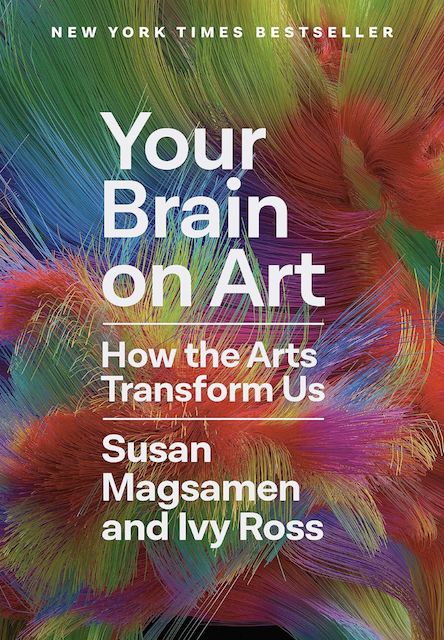
Susan Magsamen and Ivy Ross, Your Brain on Art: How the Arts Transform Us. On reserve at the library, but you can download a free copy when you log into the library website (using your UCSB Net ID).
4) The Course Syllabus can be found HERE.
5) The Calendarwhere your weekly reading and writing assignments are located, can be found HERE.
6) Information about Lectures and Sections can be found HERE.
7) The Research Paper prompt can be found HERE.
8) The UCSB Library Art 1A Research Page can be found HERE.
10) View the UCSB policy about Academic Integrity and Academic Dishonesty (cheating, plagiarism, furnishing false information, unauthorized collaboration and misuse of course materials) HERE.
11) Fill out the museum liability waiversAll trips require Liability Waivers: Fill out all three of the liability waivers (HERE):
*Simply sign and date them. You must use your full legal name as it appears on eGrades and GOLD.
12) Information about the Department of Art can be found HERE.
13) The UCSB Counseling and Psychological Services (CAPS) contact information can be found HERE.
14) The UCSB Health and Wellness website can be found HERE.
15) UCSB Department of Art Intellectual Challenge Policy: "Intellectual challenge and academic rigor are among the foundations of our program. Our faculty foster communities of inquiry and free speech based in self-awareness, individual responsibility, and an informed world view. We encourage divergent opinion and cogent argument, believing lively debate, exposure to differing viewpoints, and a certain level of discomfort are essential to intellectual and artistic growth.
 
In our classes, students will be shown work and introduced to theories and practices that may challenge their beliefs and assumptions. Students are expected to think critically rather than react impulsively; to consider opposing viewpoints and others’ opinions and experiences with openness and thoughtfulness; and to engage in a manner befitting themselves as artists and scholars in this university, an institution of higher learning."

ART 1A MUSEUM FIELD TRIPS WINTER 2026

This quarter we have two spectacular field trips planned. Our first field trip is to the Los Angeles County Museum of Art (LACMA) and the second field trip is to the Getty Center. There are simply too many important exhibitions between these two museums, and therefore we will have two field trips. These field trips are all day events, and they are in lieu of the lectures that week. If you are unable to go to the Getty Center or LACMAthere is an alternative field trip for you to attend on your own during the week of our LACMA or Getty TripsThe alternative trip is to the Santa Barbara Museum of Art (details below). You must attend one of the Los Angeles field trips, and can do the other in Santa Barbara, if you can't make the trip to LA twice. It is by far preferable that you attend both Los Angeles field trips.

PLEASE FILL OUT ALL THREE OF THE LIABILITY WAIVERS ASAP:

All three liability waivers are in this one link. Be sure to sign and date all three, and you must use your first and last name. Link HEREhttps://na3.docusign.net/Member/PowerFormSigning.aspx?PowerFormId=619933e0-71a3-4e2c-be72-4cef88e57e41&env=na3&acct=36d87d60-c882-4887-835a-bc389fb776dd&v=2

A FEW TIPS TO PREPARE FOR OUR FIELD TRIPS:

1) Be sure that you have our emails with you! If you arrive late, you want to be able to find us at the museum. However, try to leave early so that you arrive on time, because reception isn't good in all parts of the museums, and you may be waiting a long time before we see your email.

2) I would suggest eating a big breakfast since we won't be taking a break for lunch until later in the day. Furthermore, pack snacks for the road, and for lunch, unless you want to treat yourself to food at the museum.

3) If you are driving from Santa Barbara, be sure to give yourself at least two hours to drive to LA. You never know what kind of traffic that you will encounter.

4) Wear comfortable shoes and clothing! We will be doing a lot of walking and hiking up stairs, so you want to be very comfortable.

5) Charge your phone since you will want to take a lot of pictures at the museum.

FIELD TRIP #1: LACMA ON SATURDAY, JANUARY 31 AT NOON

FIELD TRIP #2: THE GETTY CENTER ON SATURDAY, FEBRUARY 14 AT 1:00PM

MANDATORY LIABILITY WAIVERS (PLEASE FILL OUT ALL OF THEM TO BE ELIGIBLE FOR ALL OF THE FIELD TRIPS):

All three liability waivers are in this one link: HERE. Be sure to sign and date all three.

Students must submit the liability waiver forms for each trip, and will not receive free admission without them. If you show up to the museum without having done this, you will have to pay full admission and you will not legally be recognized as part of the UCSB Department of Art field trip. If you have difficulty filling out your DocuSign Liability Waiver, then email your professor and our Undergraduate Advisor, Hannah Vainstein: arts-undergraduate@ucsb.edu

FIELD TRIP #1 ON SATURDAY, JANUARY 31: LACMA AT 12:00PM

Students must submit the liability waiver form, and will not receive free admission to LACMA without it. If you show up to the museum without having done this, you will have to pay full admission and you will not legally be recognized as part of the UCSB Department of Art field trip. If you have difficulty filling out your DocuSign Liability Waiver, then email your professor and our Undergraduate Advisor, Hannah Vainstein: arts-undergraduate@ucsb.edu

MEETING AT LACMA:

We will meet at LACMA at the Wilshire Blvd. entrance next to the ticket office and Chris Burden's Urban Light sculpture (shown picture above) at 12:00PM on Saturday, January 31. LACMA will be providing us with free admission to the museum, but they do not provide free parking. I will be waiting for you with your free admission ticket.

Please read all guidelines HERE before your visit. https://www.lacma.org/plan-your-visit

5905 Wilshire Boulevard, Los Angeles, CA 90036
Phone: (323) 857-6010

Parking costs $23.00 per vehicle, and it is not part of our free admission. You can also park on the street in the surrounding neighborhoods, and at parking meters (but you will have to periodically run back to your car to feed your meter).

FIELD TRIP #2 ON SATURDAY, FEBRUARY 14: THE GETTY CENTER AT 1:00PM

Students must submit the liability waiver form, and will not be able to attend without it. If you have difficulty filling out your DocuSign Liability Waiver, then email your professor and our Undergraduate Advisor, Hannah Vainstein: arts-undergraduate@ucsb.edu

We will be meeting at 1:00PM on the museum side of the tram drop off (shown above). If you are carpooling (2 or more people from Art 1A and/or Art 196 students in a single vehicle), then you are eligible to receive free parking, otherwise you must pay $25.00 for parking. Only students in my classes are eligible for free parking. Parking Information: https://www.getty.edu/visit/center/parking-and-transportation/

The Getty Center
1200 Getty Center Dr.
Los Angeles, CA 90049
Parking and Transportation Information HERE

ALTERNATIVE MUSEUM TRIP: If you are unable to attend the Getty Center, or LACMA then you can go on your own on a different day, or do the alternative trip to the SBMA, but you must attend at least one of the LA museums with our class.

ALTERNATIVE TRIP to SBMA: This is in case of an emergency that prevents you from attending one of the two LA museum field trips, but not both.

Santa Barbara Museum of Art
1130 State Street
Santa Barbara, CA 93101
Phone: 805.963.4364
@sbmuseart
Tues - Sun 11 am - 5 pm
Thurs 11 am - 8 pm
Closed Mondays and holidays
Free to students with ID

Nota Bene: The museum trip is all-day immersive experience, and therefore the museum field trip is in lieu of both of the Art 1A lectures, and the Art 196 seminar meeting that week. If you do not go to the museum that week, or do the alternative museum field trip, then you will have two absences and a zero on the writing assignment that week. Take a selfie at the museum, and photographs of the works of art that were of interest to you, and include them in your paper (see assignments  in the "Reading" tab at the top of the website).